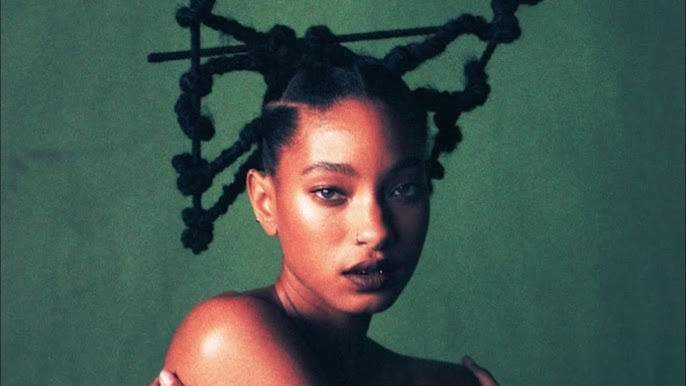

“palms to the earth because i feel her breathe/syncing to a rhythm between I and she”
While not released as a single, “between i and she” stands out amongst Empathogen’s 12 tracks. There is a wistful, relaxedly spirited nature to the song, providing an effortless yet pervasive optimism and sense of freedom. It is honest, acknowledging a feeling of tension within a state of spiritual liberty. These emotions are not juxtaposed against each other, and instead feel like a singular cohesive unit, as is consistent with the human experience. This is a marked ability, to retain whimsicality while holding space for the murky parts of life, and something Willow often does right. This is the core theme of “between i and she” and the core theme of this curation.
This theme is most clearly seen in impressionist paintings. They retain the nature of their subject matter (including that of tragedies) but encases it in a fanciful expression of light and color.
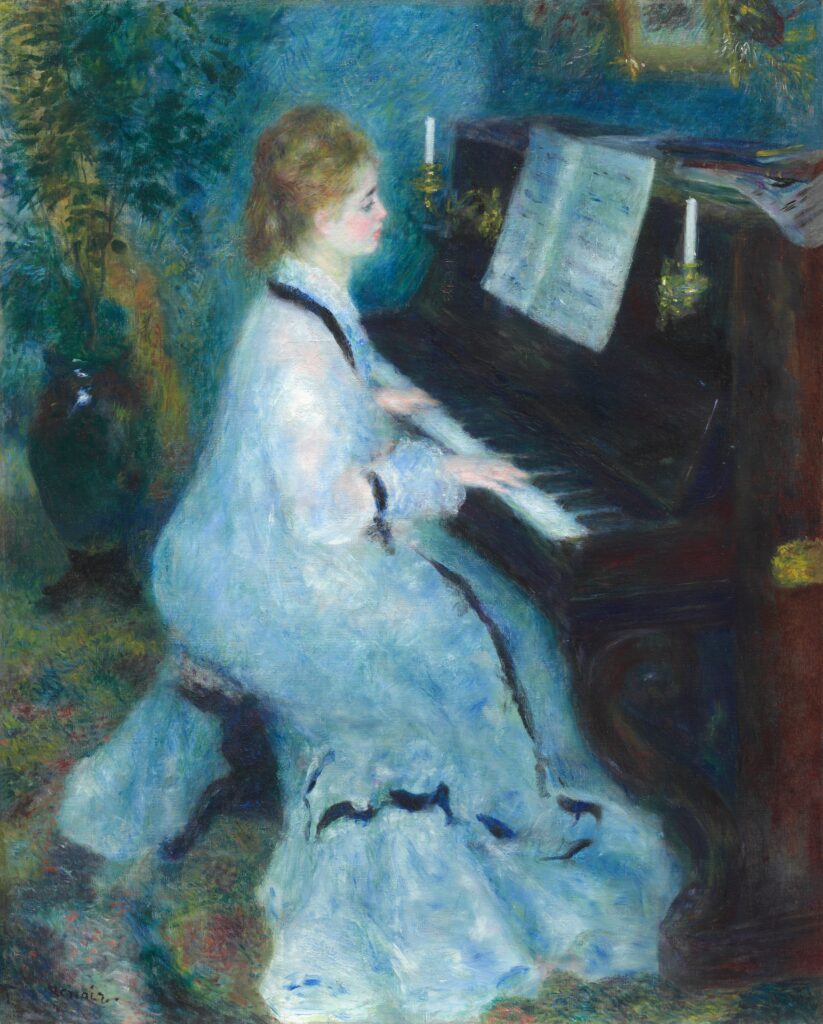
One of the most famous impressionists, Renoir has mastered the melancholy. With the pained expression of his subject paired with the ghostly white glow of her skin and garment, Renoir intended to depict “ideal womanhood” and instead has highlighted the dissatisfaction of the 19th century domestic woman. She is resigned to this life, the piano representing her only expression of creativity and intellect, a tragic state shrouded in dream-like haze.
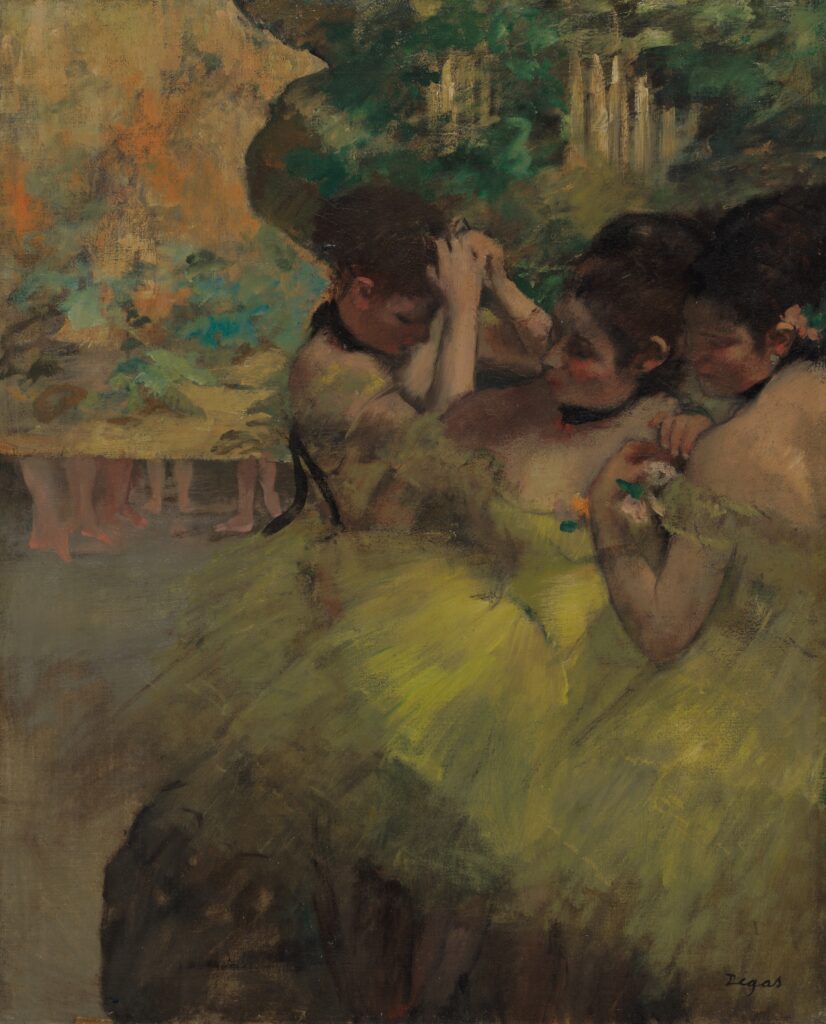
I did not spend much time in dance, however I believe Degas has perfectly captured the tension that exists before such a performance. The bright yellow houses the emotional vibrance of the work, with his bold brushstrokes removing any identifiable features of the subjects. This inability to truly identify the subjects allows the viewer to understand the generality of this experience. The work is dramatic, but depicts tension without inspiring despondency. This exists in a strange parallel to “between i and she” while one lets go of the inner tension, the other holds it while depicting it with joy.
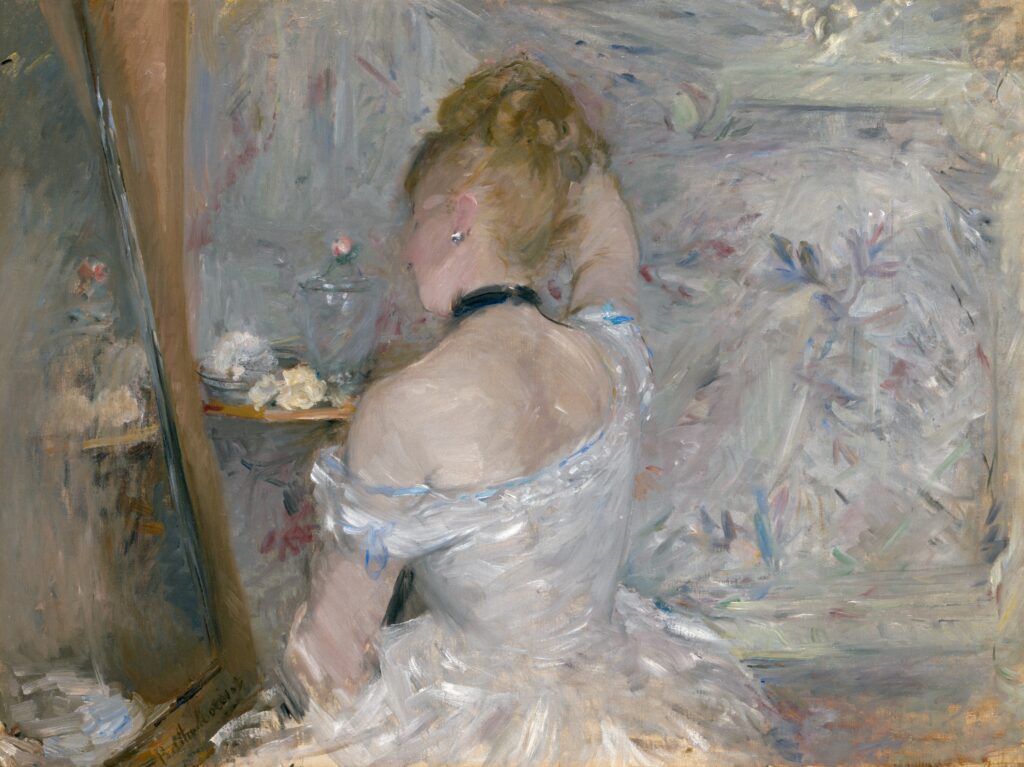
As the only woman depicting another woman thus far, Morisot does something interesting. Her brief, fleeting brushstrokes inspire a sort of sense of urgency, despite depicting a somewhat mundane scene. We are urged to attempt to view the setting through the eyes of the subject, as we stare at her back, we are not so much interested in her alone, but instead we are drawn to her space. With the only clear view in the mirror being within her eye-line, we come to understand that her perspective is what is most important. She is granted the privilege of freedom from our visual assault while we occupy ourselves in questioning what is happening around her. In our contemplation, she is free to exist as she pleases in her own intimate space.
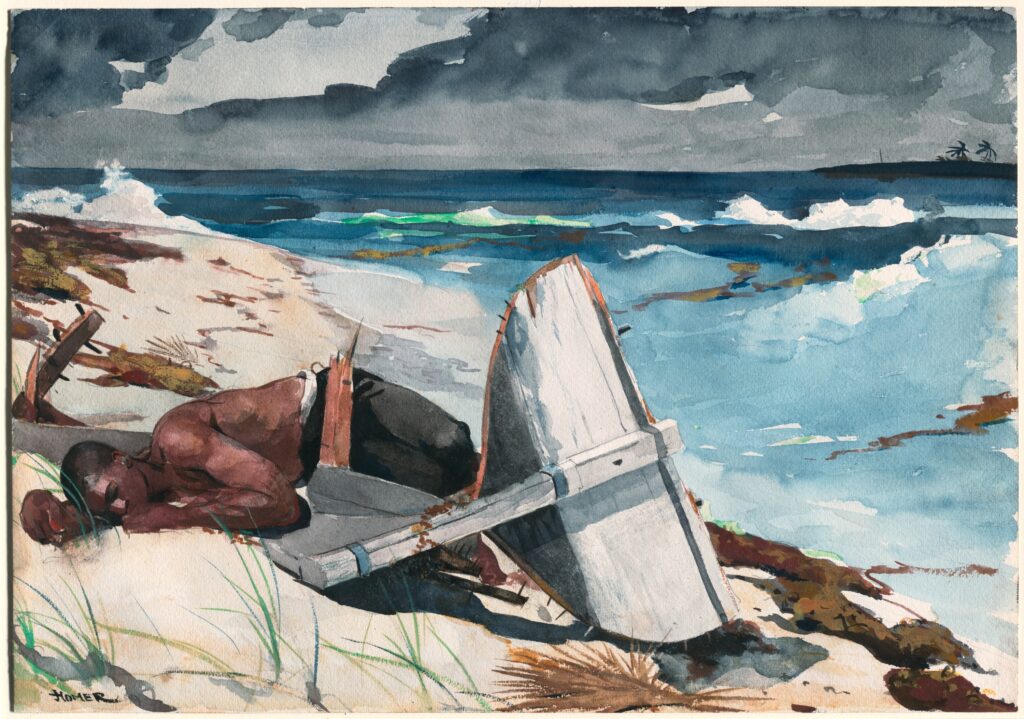
Moving away from impressionism, this realist work by Winslow Homer depicts a young man, clutching the sandy banks, surrounded by his destroyed boat. Clearly in distress, he has both suffered and survived. While Homer had a fascination with the rapidly changing weather in the tropics, this particular scene places the subject at the whims of nature, enforcing the frightening truth of our comparative weakness to the strength of Mother Earth. It is necessary to characterize Earth as a woman, to acknowledge her ability to birth and nourish us alongside our own. Just as Willow acknowledges, freedom is to move in harmony with the Earth, perhaps in this case, the sea.
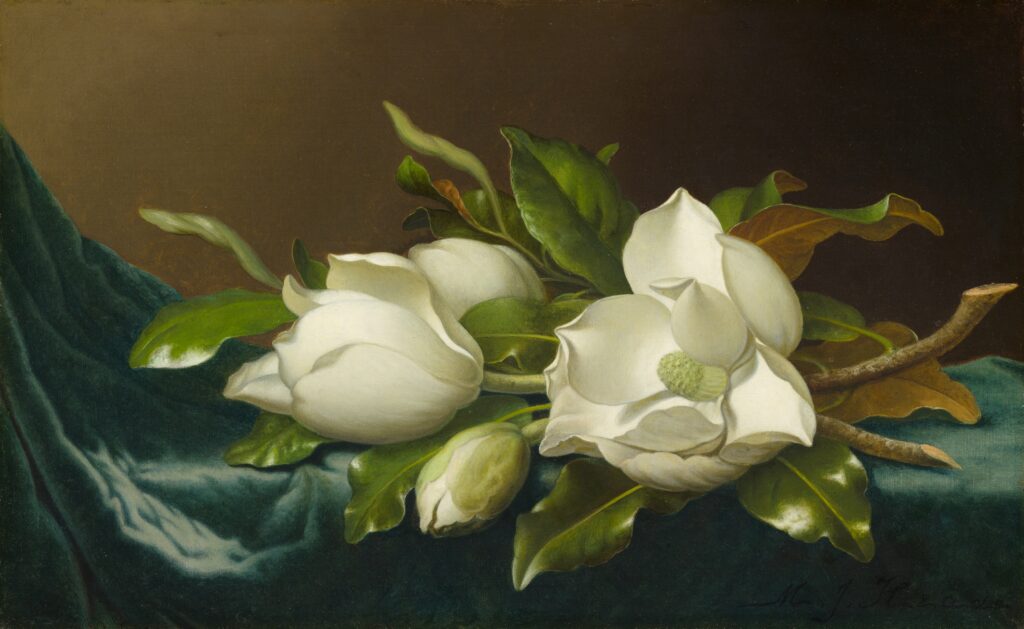
Originally painted to signify the intensity of a dream using the native Floridian magnolia, this work represents many of the key concepts of “between I and she”. The representative perseverance of the magnolias paired with the peace and clarity signaled by the warm-lit light blue, both enveloped by the rich luxury of velvet, create the perfect emblem of Willow’s message.
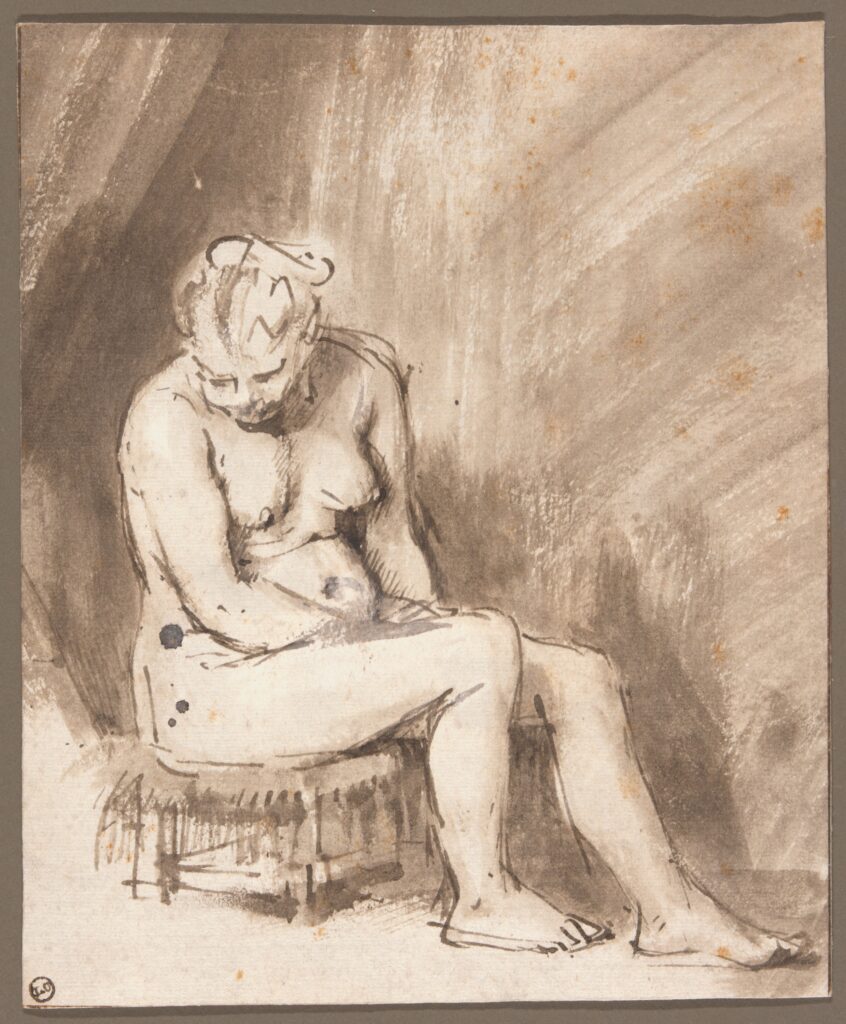
A remarkable departure from Rembrandt’s typical depiction of the human body, this work contains short, sure lines, removing the manufactured sumptuous nature of many such depictions. In my opinion, this is the referenced “between”. Fully formed without a doubt, but not quite so extravagant as to hide the honest nature of one’s humanity.
Now unfortunately, not all of my desired works are public domain, and so I link them below so that they may be recognized as well.
American Costume, David Hammons (1970)
Nude, James Van Der Zee (1925)
Sherry, Susan, Wendy, Laura, Roy De Carava (1983)